
























Arc flash incidents remain one of the most dangerous electrical hazards in the workplace. For businesses operating in high-risk environments—such as manufacturing, mining, utilities, and construction—understanding compliance is not just a regulatory requirement, but a critical step in protecting lives.
This guide breaks down arc flash safety into simple, practical terms, helping you protect your workforce while reducing risk to your business.
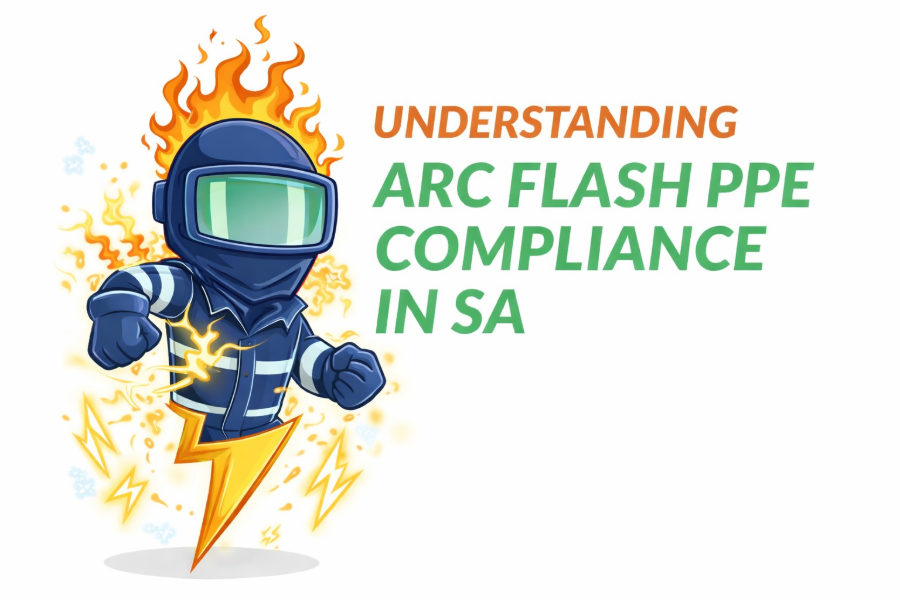
An arc flash is a sudden release of electrical energy through the air when a fault occurs between conductors or from a conductor to ground.
This results in:
- Extremely high temperatures (hotter than the sun).
- Intense light (which can cause blindness).
- Pressure waves (arc blast).
- Molten metal and flying debris.
In simple terms: it is an electrical explosion that happens in milliseconds—but can cause severe burns, injury, and even death.
Arc flash PPE is designed specifically to protect workers from the thermal effects of this energy release, not the blast itself.
Arc Flash Compliance Standards in South Africa
South Africa does not operate in isolation—it aligns closely with international best practice, supported by local SANS standards and legislation.
Key South African Framework
- Occupational Health and Safety Act (OHS Act)
- Electrical Machinery Regulations (EMR)
- SANS standards developed by the South African Bureau of Standards
These regulations require employers to provide suitable PPE and ensure safe electrical systems.
Key Arc Flash Standards Used in South Africa
South African compliance typically includes a combination of local and international standards:
- SANS 724 – Arc flash PPE requirements (local benchmark)
- NFPA 70E – Electrical safety in the workplace (widely adopted globally)
- ASTM F1506 / F1959 – Fabric and arc rating performance standards
OR
- IEC 61482-1-1 / 61482-1-2 – Arc-resistant clothing testing standards
In practice, most South African companies use a hybrid approach—following SANS requirements while applying NFPA 70E OR IEC 61482-1 for PPE selection and risk assessment.
Arc Flash PPE Categories (Used in South Africa)
Arc flash PPE is categorised based on the level of thermal protection required, measured in cal/cm² (incident energy).
The 4 PPE Categories
- Category 1: 4–8 cal/cm²
Basic arc-rated clothing (shirt and trousers). - Category 2: 8–24 cal/cm²
Higher protection with arc-rated garments and face protection. - Category 3: 25-39 cal/cm²
Multi-layer clothing and additional protective equipment. - Category 4: 40+ cal/cm²
Full arc flash suit with hood, gloves, and maximum protection.
These categories are derived from international guidance like NFPA 70E and are widely applied in South Africa.
Important: PPE must always match or exceed the incident energy determined through an arc flash risk assessment.
Types of Arc-Resistant Clothing
Arc-rated clothing is designed to resist ignition and insulate the wearer from thermal energy.
Common Types of ARC PPE
- Arc-rated shirts and trousers
- Everyday protection for lower-risk tasks.
- Typically CAT 1–2.
- Arc-rated coveralls / boilersuits
- Single-layer or multi-layer protection.
- Common in industrial environments.
- Arc flash suits (full-body protection)
- Includes jacket, trousers, hood, gloves, and visor.
- Used for high-risk work (CAT 3–4).
- Arc-rated base layers
- Worn underneath outer garments.
- Improve overall protection.
Fabric Types
Arc flash clothing is manufactured from specialised materials that are either inherently flame-retardant or chemically treated to achieve flame resistance. Both options are designed to resist ignition and protect the wearer from thermal energy, however, the way they deliver this protection differs, along with the benefits they offer.
Inherently flame-retardant fabrics have flame-resistant properties built into the fibre itself (the matter is flame-retardant before going into a solid fibre form – requiring no treatment to achieve flame retardancy once in a solid state). This means the protection is permanent and will not diminish over time or through washing. As a result, there is no risk of reduced performance due to incorrect laundering. In addition, because these fabrics do not rely on chemical treatments, they are generally less likely to cause skin irritation and are often considered more comfortable for everyday wear. Common examples include Nomex®, Kevlar® and I-ARC.
Treated flame-retardant fabrics, on the other hand, are made from standard (flammable) fibres that have been chemically treated to provide flame resistance. While they still offer effective protection, this treatment can degrade over time, particularly if garments are not laundered according to the manufacturer’s guidelines.
Inherently flame-retardant fabrics are typically more expensive than treated alternatives but generally offer a longer lifespan (especially if fabric composition contains aramid). Therefore, while initial capital investment may be higher for inherent garments, this typically balances out over time due to lower replacement rates.
Note: It is strongly recommended that arc-rated garments from the same brand are worn together and not mixed across different manufacturers. This ensures consistency in performance and, in the event of an incident, allows for clear accountability should there be a product failure.
Key Compliance Takeaways
- Arc flash PPE is the last line of defence—risk elimination and engineering controls come first.
- PPE must be selected based on a formal arc flash risk assessment.
- Garments must be tested and certified—not just the fabric.
- Compliance requires alignment with both SANS and international standards.
- Training and awareness are just as important as the PPE itself.
Arc flash compliance is not just about ticking a box—it’s about ensuring that every worker who interacts with electrical systems goes home safely.
By understanding the hazard, applying the correct standards, and selecting the right PPE, businesses can significantly reduce risk and build a safer working environment.
At Pienaar Brothers, we supply a comprehensive range of arc-rated clothing designed to meet both South African and international compliance standards. Whether you’re equipping a full team or need guidance on selecting the correct PPE for your specific risk level, our team is here to help. If you have any questions or would like assistance with your arc flash PPE requirements, please don’t hesitate to get in touch.


Comments